
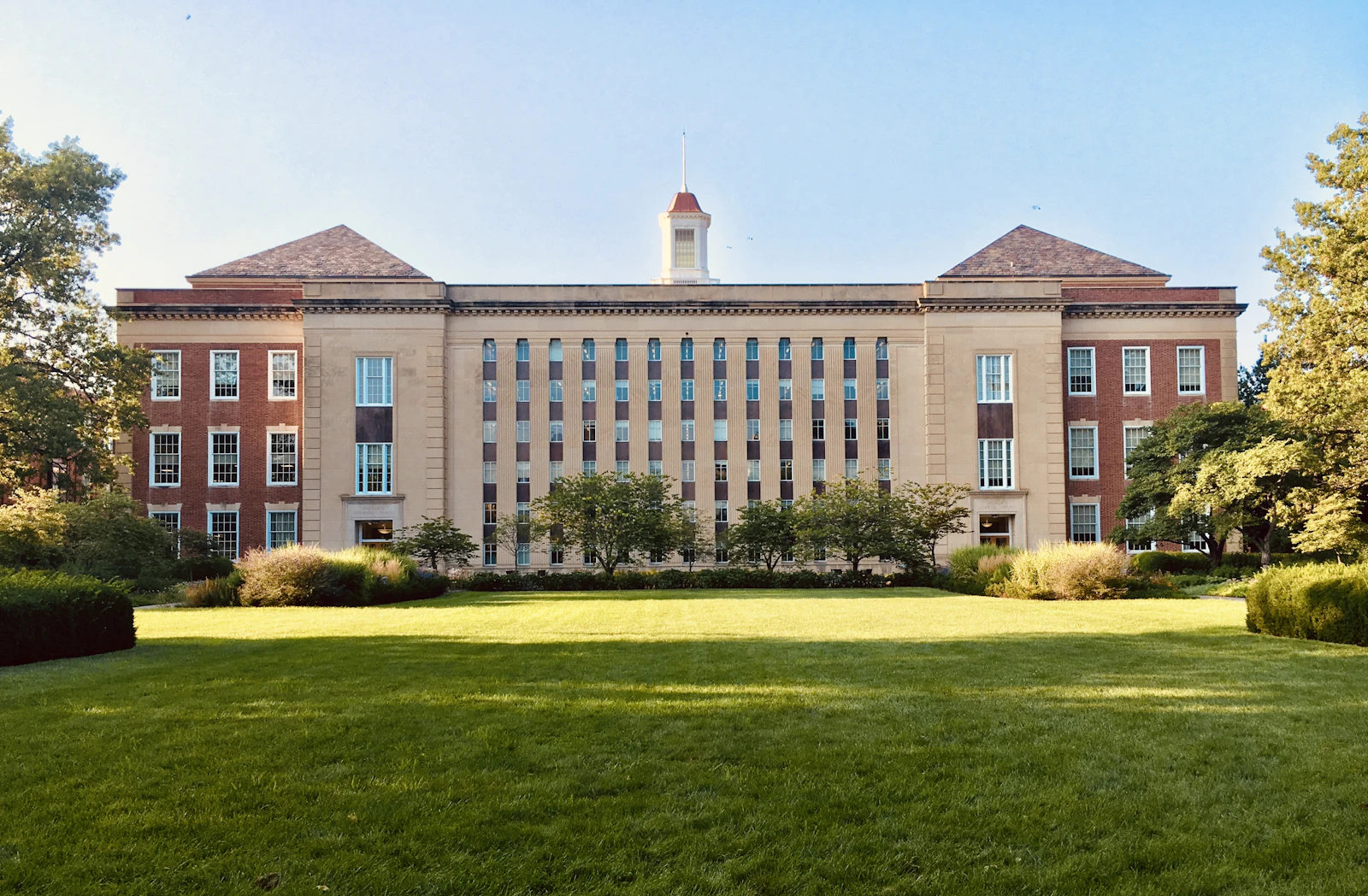

The United States remains the global capital of computer science and engineering — home to MIT, Stanford, Carnegie Mellon, and the research labs that shape AI, semiconductors, and quantum computing. In 2026, competition for a CS seat at a top US school is tougher than ever, but the return on investment — median starting salary of USD 135,000 for new grads at FAANG-tier employers — is unmatched. This guide ranks the top 10 universities, compares Ivy League vs top state schools, and lays out exactly what international students need to get in and thrive.
Before You Read On
- The United States remains the global capital of computer science and engineering — home to MIT, Stanford, Carnegie Mellon, and the research labs that shape AI, semiconductors, and quantum computing.
- Why Choose the USA for Tech Education: US universities dominate every major global ranking for computer science and engineering — QS, Times Higher Education…
- Overview of the Best Universities (Ivy League vs. Top State Schools): The top 10 US universities for CS and Engineering in 2026 mix elite private schools with powerhouse public research universities.
- Scholarship Opportunities for Engineering Students: CS and engineering are the most heavily funded departments in the US — which means more scholarship dollars available for international students than in any o…
- Career Prospects and Research Opportunities: A CS or engineering degree from a top-10 US university is one of the most valuable credentials in the global job market.
Why Choose the USA for Tech Education?
US universities dominate every major global ranking for computer science and engineering — QS, Times Higher Education, and US News all put 7 of the world's top 10 CS programs in the United States. Three reasons drive this dominance:
- Research funding: US universities receive over USD 90 billion per year in federal + industry research grants — more than the next five countries combined.
- Industry proximity: Silicon Valley, Seattle, Austin, and Boston place students within driving distance of Google, Apple, Meta, Microsoft, NVIDIA, and thousands of well-funded startups.
- OPT + STEM extension: CS and engineering degrees qualify for 36 months of Optional Practical Training after graduation — a direct pipeline to H1B and long-term careers.
For international students, a US CS degree is not just an education — it's a work-authorization pathway that no other country offers at the same scale.
Overview of the Best Universities (Ivy League vs. Top State Schools)
The top 10 US universities for CS and Engineering in 2026 mix elite private schools with powerhouse public research universities. Both paths lead to the same top employers — but the price tags and cultures differ sharply.
- 1. Massachusetts Institute of Technology (MIT) — the global benchmark for CS, EE, and AI research.
- 2. Stanford University — Silicon Valley's home campus; unmatched startup and VC network.
- 3. Carnegie Mellon University (CMU) — the world's #1 program for AI, robotics, and software engineering.
- 4. University of California, Berkeley — top public school for CS; strong pipeline into Google, Apple, and Meta.
- 5. California Institute of Technology (Caltech) — small, research-intensive, dominant in EE and applied physics.
- 6. University of Illinois Urbana-Champaign (UIUC) — top public CS program; home of the ILLIAC and NCSA.
- 7. Georgia Institute of Technology — best-value engineering degree in the US; huge OMSCS online program.
- 8. Cornell University — Ivy League CS with a strong systems and theory focus, plus a New York City tech campus.
- 9. University of Michigan Ann Arbor — deep strength in AI, embedded systems, and automotive tech.
- 10. University of Washington Seattle — direct pipeline to Microsoft, Amazon, and NVIDIA.
Ivy League + private schools (MIT, Stanford, CMU, Caltech, Cornell) charge USD 60,000–68,000 per year in tuition but offer generous need-based aid — Stanford and MIT often cover 100% of demonstrated need. Top state schools (Berkeley, UIUC, Georgia Tech, Michigan, UW) charge USD 40,000–52,000 per year out-of-state, with fewer aid dollars but far more assistantships for graduate students.
Admission Requirements for International Students
Getting into a top-10 CS program in 2026 requires a strong academic core plus one or two standout signals. Here's the realistic bar:
- Undergraduate GPA: 3.85+ / 4.0 (or top 5% of class) for the private schools; 3.7+ for top public schools.
- GRE: optional at most schools in 2026, but a 330+ (with 168+ quant) still strengthens borderline applications.
- TOEFL 100+ or IELTS 7.5+ (Duolingo 130+ accepted at most schools).
- Two to three strong letters of recommendation — ideally from professors who supervised research.
- A Statement of Purpose that names specific faculty and labs you want to work with — generic SOPs get rejected.
- Research or industry signal: a published paper, a top-tier internship (Google STEP, Microsoft Explore), or a Kaggle / Codeforces / GitHub track record.
- For undergraduate CS: SAT 1500+ (or ACT 34+), 4–5 AP courses including AP CS-A and Calculus BC, and at least one deep technical project.
Scholarship Opportunities for Engineering Students
CS and engineering are the most heavily funded departments in the US — which means more scholarship dollars available for international students than in any other field.
- MIT & Stanford Need-Based Aid — 100% of demonstrated need covered; families earning under USD 100K/year often pay near zero.
- Graduate Research Assistantship (RA) — most PhD and many MS students at top-10 schools get full tuition + USD 30,000–42,000/year stipend.
- Teaching Assistantship (TA) — usually starts in year 2; covers tuition + USD 22,000–32,000 stipend.
- Knight-Hennessy Scholars (Stanford) — full graduate funding + leadership program; ~100 scholars per year.
- NVIDIA Graduate Fellowship, Google PhD Fellowship, Meta Fellowship — USD 40,000–75,000 per year for accepted PhD students in AI / systems.
- Fulbright Foreign Student Program — up to 2 years of full funding for master's students from 150+ countries.
- University-specific merit awards: Berkeley Regents' Scholarship, Georgia Tech President's Scholarship, UIUC Grainger Scholarships.
For PhD applicants, assume you should not pay tuition out of pocket — if a top-10 school admits you without funding, treat it as a soft rejection and apply again next cycle.
Career Prospects and Research Opportunities
A CS or engineering degree from a top-10 US university is one of the most valuable credentials in the global job market. The 2026 outcomes are striking:
- Median starting total compensation (bachelor's / master's, FAANG-tier employer): USD 135,000–195,000 per year.
- PhD graduates in AI / ML: USD 250,000–450,000 total comp at OpenAI, Anthropic, Google DeepMind, and NVIDIA.
- OPT + 24-month STEM extension = 36 months of legal work in the US after graduation.
- H1B lottery selection rates are 2–3× higher for graduates of top-10 CS programs due to specialty-occupation strength.
- Research labs: MIT CSAIL, Stanford AI Lab (SAIL), CMU Robotics Institute, Berkeley BAIR, Georgia Tech Machine Learning Center — direct pipelines to industry research roles.
Related reads on LifeWestWay: our F1 Student Visa 2026 guide covers your immigration pathway, and our Cost of Living in the USA breakdown helps you plan your budget once you're admitted.
Common Questions, Answered
Q.Which US university is #1 for computer science in 2026?
MIT and Stanford tie at the top for computer science in 2026, with Carnegie Mellon ranked #1 specifically for AI and software engineering. All three are effectively interchangeable for career outcomes.
Q.Is it cheaper to study CS at a top state school vs an Ivy League?
Sticker price yes — public schools like Berkeley, Georgia Tech, and UIUC charge USD 40,000–52,000 vs USD 60,000+ at Ivies. But after need-based aid, MIT and Stanford often cost less for middle-income international families than a top state school with no aid.
Q.Do I need research experience to get into a top-10 CS master's or PhD program?
For PhD, yes — you need at least one strong research project or publication. For MS, research is a strong plus but a top-tier internship, a competitive-programming record, or a serious open-source contribution can substitute.
Q.Can international CS graduates stay and work in the USA?
Yes. CS and engineering degrees qualify for 12 months of OPT plus a 24-month STEM extension — 36 months of work authorization total. Most FAANG-tier employers sponsor H1B in year one of OPT.
Q.When was this guide last updated?
This guide was last reviewed and updated on 2026-07-02 by the LifeWestWay Editorial Team. We re-check fees, thresholds and processing times against primary sources whenever the underlying rules change.
Written & fact-checked by
LifeWestWay Editorial Team
Research & fact-checking desk — not lawyers, accountants or licensed advisers
This guide is researched and written in-house. Every rule, fee, threshold and salary figure is checked against primary government sources (immigration departments, tax authorities and national statistics agencies) before publishing, each page names the sources it relies on, and we re-check fast-moving pages — fees, visa rules and tax bands — at least every quarter and after any announced policy change.


