
Why Following a Tax Preparation Workflow Matters
Preparing your tax return is much easier when you follow a logical, step-by-step process. Jumping between forms or entering information before gathering all of your documents can lead to mistakes, missed deductions, and unnecessary delays.
A structured workflow helps you organize your records, complete supporting schedules first, and transfer the correct figures to your main tax return. Whether you're filing on paper or using tax software, following the right order makes the process more accurate and less stressful.
Tax Preparation Workflow
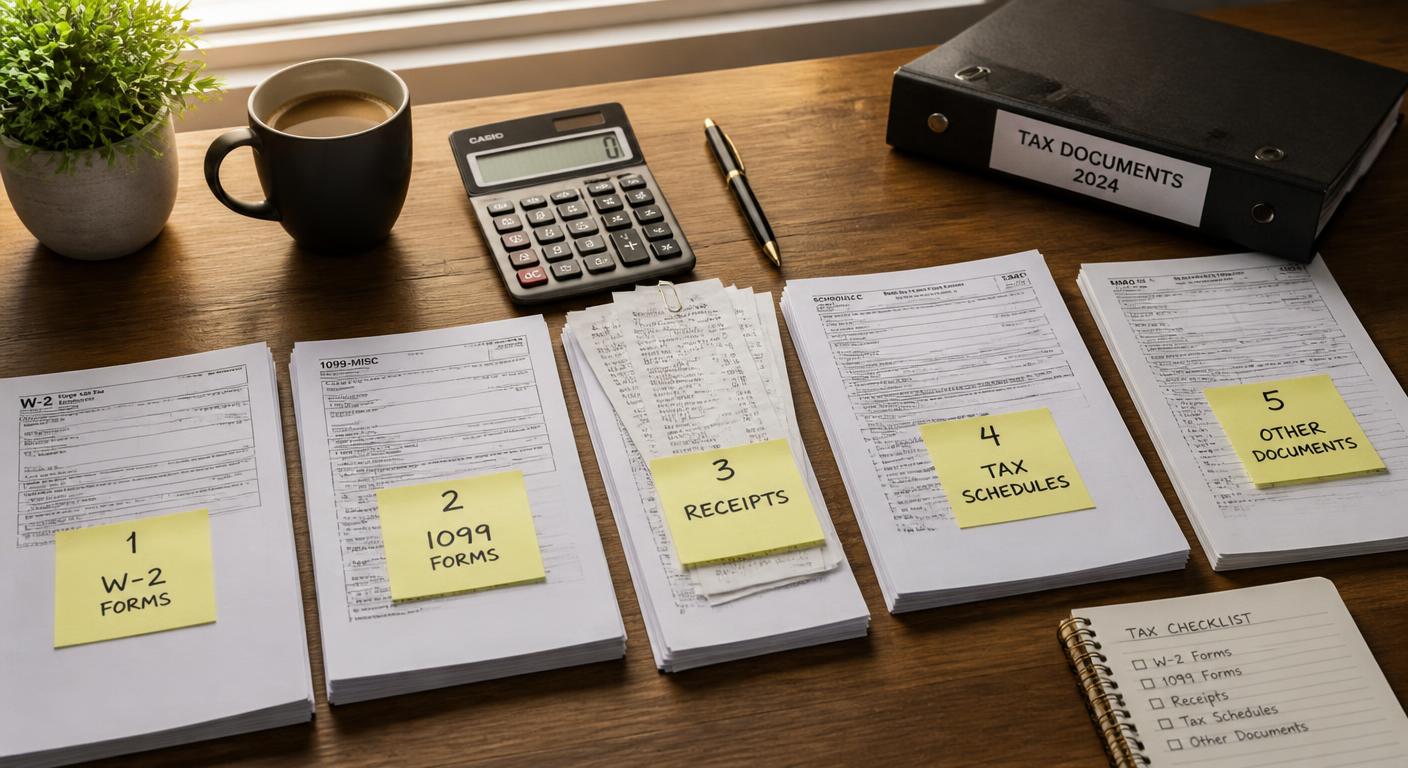
Phase 1: Gather and Organize Your Tax Documents
Before opening your tax software or filling out any forms, collect all the documents you'll need. Starting with complete and organized records helps reduce errors later in the process.
Income Documents
Gather every document that reports income you received during the tax year, including:
- Form W-2 from each employer
- Form 1099-NEC for freelance or contract work
- Form 1099-INT for interest income
- Form 1099-DIV for dividend income
- Other applicable 1099 forms for retirement distributions, unemployment benefits, or investment transactions
Review each document carefully to make sure you've received everything you're expecting before you begin filing.
Deduction and Credit Records
Next, organize documents related to deductions and tax credits, such as:
- Student loan interest statements
- Medical expense records
- Charitable donation receipts
- Education expenses
- Mortgage interest statements, if applicable
It's also helpful to keep a copy of last year's tax return nearby, especially if you need information such as your prior-year Adjusted Gross Income (AGI) for identity verification.
Phase 2: Complete Supporting Schedules and Worksheets
Once you've organized your documents, complete any schedules or worksheets required for your tax situation before filling out Form 1040.
Income Adjustments and Deductions
Depending on your circumstances, you may need to complete additional schedules, including:
- Schedule A for itemized deductions
- Schedule 1 for additional income and certain adjustments
- Schedule 2 for specific additional taxes
- Other schedules required for self-employment income, investments, or rental properties
Completing these forms first ensures the correct totals are available when you prepare your main tax return.
Tax Credit Worksheets
Many tax credits require separate worksheets before the final amounts are entered on Form 1040. These may include calculations for:
- Child Tax Credit
- Education credits
- Earned Income Tax Credit (EITC)
- Other credits based on your filing situation
Double-check your calculations to ensure the figures match the amounts transferred to your tax return.
Phase 3: Complete Form 1040
After finishing your supporting schedules, you're ready to complete your primary federal tax return.
Enter Your Information
Begin by completing the basic sections of Form 1040:
- Personal information
- Filing status
- Social Security number
- Dependent information, if applicable
Then transfer income totals from your W-2s, 1099s, and completed schedules to the appropriate lines on the form.
Calculate Your Tax
Once all income has been entered:
- Determine whether you'll claim the standard deduction or itemize deductions.
- Calculate your taxable income.
- Figure your total federal tax.
- Apply any eligible tax credits.
- Subtract withholding and estimated tax payments to determine whether you owe additional tax or qualify for a refund.
Review each section carefully before moving to the final submission step.
Frequently Asked Questions (FAQ)
Why should I complete tax schedules before filling out Form 1040?
Many schedules calculate totals that must be entered directly onto Form 1040. Completing them first helps prevent calculation errors, missing information, and overlooked deductions or credits.
What should I do if I receive a tax document after I've started preparing my return?
If you receive another W-2, 1099, or other important tax document before filing, update your return with the new information before submitting it. Filing an incomplete return could result in IRS notices, additional tax, or the need to file an amended return later.
Can tax software guide me through this workflow?
Yes. Most modern tax preparation software follows a step-by-step interview process that asks for your information in a logical order. As you answer questions, the software automatically fills in Form 1040 and any required schedules, helping reduce manual data entry and common filing mistakes.