
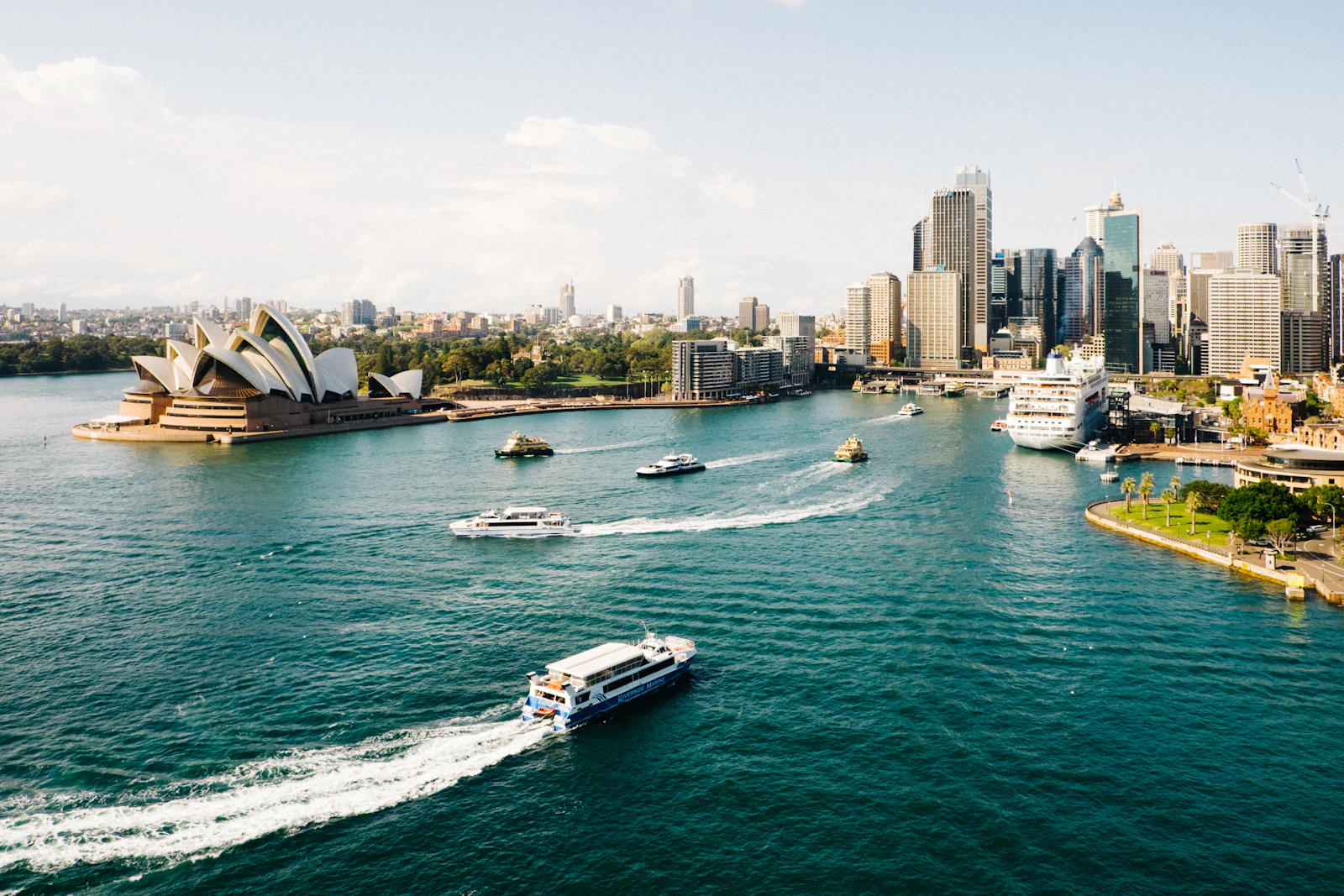

The Australian Student Visa (Subclass 500) is your legal permit to study full-time at a CRICOS-registered institution in Australia and to work up to 48 hours per fortnight during term. It replaced every earlier student visa in 2016 and remains the single pathway for international students in 2026. This guide walks you through every requirement — Confirmation of Enrolment, OSHC, GTE statement, financial evidence, English proficiency, and the Department of Home Affairs (DHA) fees and timelines — so your application arrives complete on the first submission.
Before You Read On
- The Australian Student Visa (Subclass 500) is your legal permit to study full-time at a CRICOS-registered institution in Australia and to work up to 48 hours per fortnight during term.
- Understanding the Subclass 500 Visa Requirements: The Subclass 500 is a single visa covering all sectors — schools, ELICOS (English), VET, higher education, postgraduate research, and non-award courses.
- Essential Documents Checklist (CoE, OSHC, GTE Statement): The Subclass 500 is submitted entirely online through ImmiAccount at immi.homeaffairs.gov.au.
- Financial Requirements and English Proficiency Tests (IELTS/PTE): DHA updated the annual living cost benchmark for Subclass 500 applicants to AUD 29,710 (2024 update, still in force in 2026).
- Visa Application Fees and Processing Timeframes: DHA raised the Subclass 500 base application fee to AUD 1,600 in July 2024 (up from AUD 710) and further indexation applies each 1 July.
Understanding the Subclass 500 Visa Requirements
The Subclass 500 is a single visa covering all sectors — schools, ELICOS (English), VET, higher education, postgraduate research, and non-award courses. Grant duration matches your course length plus a wrap-up period (typically 2–4 months) and lets you bring eligible dependants.
- Enrolled full-time in a CRICOS-registered course with a valid Confirmation of Enrolment (CoE).
- Meet the Genuine Temporary Entrant (GTE) requirement — from 2024 renamed the Genuine Student (GS) requirement in policy, but the GTE statement is still the core evidence.
- Overseas Student Health Cover (OSHC) for the full duration of your stay, from an approved provider (Medibank, Bupa, Allianz Care, AHM, or nib).
- Sufficient funds to cover 12 months of tuition, living costs (AUD 29,710/year in 2026), and return airfare.
- English proficiency: IELTS 5.5+ overall (course-dependent), PTE Academic 42+, TOEFL iBT 46+, or Cambridge C1 Advanced 162+.
- Health checks (chest X-ray, medical exam) at a DHA-panel physician for most applicants.
- Character requirement: police clearance from every country you've lived in for 12+ months in the last 10 years.
- Age: no upper limit, but school-sector applicants under 18 need welfare arrangements confirmed by the education provider (Form 157N or CAAW).
- Work rights: 48 hours per fortnight during term, unlimited during official course breaks.
Essential Documents Checklist (CoE, OSHC, GTE Statement)
The Subclass 500 is submitted entirely online through ImmiAccount at immi.homeaffairs.gov.au. Assemble every document before starting — DHA processing officers routinely reject incomplete applications rather than requesting more information.
- Confirmation of Enrolment (CoE) — one per course; if you're doing a packaged program (e.g. ELICOS + Bachelor's), attach both CoEs.
- OSHC policy certificate showing start date on or before your visa start date and continuous cover for the full course length.
- Genuine Temporary Entrant / Genuine Student statement (see next section).
- Financial evidence: bank statements, education loan sanction letters, scholarship award letters, or approved AASES sponsorship.
- English test score report (IELTS/PTE/TOEFL/Cambridge/OET) or evidence of exemption (5 years' study in English, passport from an exempt country).
- Academic transcripts and completion certificates for all previous studies.
- Statement of Purpose (SOP) explaining course choice, career gap, and study plan.
- Passport bio page + any previous visas.
- Certified police clearances from every country lived in 12+ months in the last 10 years.
- Form 1221 (Additional Personal Particulars) for many nationalities.
- Medical clearance letters after your HAP ID is generated in ImmiAccount.
- For dependants: marriage certificate, birth certificates, dependant's CoE (if school-age), and their own OSHC.
Writing a Strong Genuine Temporary Entrant (GTE) Statement
The GTE statement is the single most decisive document in a Subclass 500 application. DHA uses it to test whether you are a genuine student who will leave Australia when your visa ends — not a de facto migrant using study as a shortcut. Aim for 800–1,200 words, written in the first person, addressing every listed factor directly.
- Your circumstances in your home country: family ties, property, employment, financial commitments, and reasons you'd return.
- Your potential circumstances in Australia: previous connections, relatives, any prior visa history.
- Value of the course to your future: how it advances your existing academic trajectory or career, with specific job titles and industries.
- Why Australia specifically: reference course rankings (QS, Times), research strengths, faculty by name, or unique CRICOS offerings.
- Why this provider over cheaper local alternatives — show you researched at least 3 providers globally.
- Career gap explanation if you have one — brief, factual, forward-looking.
- Immigration history: disclose every prior visa refusal (any country) — hiding these is the fastest route to a Subclass 500 refusal.
- Post-study plan: name specific Australian graduate options (485 Temporary Graduate visa) but end with a concrete return plan tied to home-country employment.
- Attach evidence for every material claim — property titles, employment letters, family financial records.
- Never use ChatGPT or template services verbatim — DHA officers process thousands and recognise generic phrasing instantly.
Financial Requirements and English Proficiency Tests (IELTS/PTE)
DHA updated the annual living cost benchmark for Subclass 500 applicants to AUD 29,710 (2024 update, still in force in 2026). You must show funds for one full year — not the entire course — plus tuition and travel, either in your own name or in the name of an eligible sponsor (parent, spouse, government).
- Primary applicant living costs: AUD 29,710/year.
- Partner/spouse: additional AUD 10,394/year.
- Each dependent child: additional AUD 4,449/year + school fees (AUD 8,000–13,000/year).
- Tuition: first 12 months' fees as invoiced by your provider (AUD 22,000–50,000+ depending on course).
- Return airfare: AUD 2,000–3,000, evidenced or accepted as declaration.
- Acceptable evidence: bank statements (3+ months old), education loan sanction letters from an approved lender, scholarship letters, or an Annual Income of AUD 72,465+ per parent (AUD 87,856 combined) with recent tax returns.
- Funds must be genuine and available — DHA rejects large deposits made just before application without explanation.
- English test minimums: IELTS 5.5 overall (6.0 for direct-entry degrees, 6.5 for postgraduate), PTE Academic 42+, TOEFL iBT 46+, Cambridge C1 Advanced 162+, OET grade B+ (health courses).
- ELICOS packaged pathway reduces minimums by 0.5 IELTS band — useful for students narrowly missing direct entry.
- Test validity: 2 years from the date sat.
Visa Application Fees and Processing Timeframes
DHA raised the Subclass 500 base application fee to AUD 1,600 in July 2024 (up from AUD 710) and further indexation applies each 1 July. Budget the 2026 fee plus dependant charges and biometric/health costs before applying.
- Base visa application charge (primary applicant): AUD 1,600 (rises with annual indexation).
- Additional applicant charge — over 18: AUD 1,190 per person.
- Additional applicant charge — under 18: AUD 390 per person.
- Subsequent entrant charge: AUD 800 per person (dependants joining later).
- Second instalment for very limited applicants required to sit English before grant: AUD 5,865 (rarely applicable).
- OSHC 12 months (single): AUD 700–800; couple AUD 3,500+; family AUD 4,500+.
- Biometrics: AUD 50 at Australian Visa Application Centres in your country.
- Health checks: AUD 350–500 depending on country and panel physician.
- Standard processing (2026): 75% of applications decided within 4 months and 90% within 6 months, per DHA published metrics.
- Vocational (VET) and Postgraduate Research generally decide fastest; ELICOS and Non-Award queues run slowest.
- Apply from outside Australia at least 3 months before course start; inside Australia switches must be lodged at least 8 weeks before current visa expiry.
FAQ (Common reasons for visa refusal)
Roughly 15–20% of Subclass 500 applications are refused each intake. The refusal reasons cluster into a small, predictable set — and each is preventable.
- Weak or copied GTE statement — the #1 refusal ground; generic language reads as non-genuine.
- Financial shortfall or unexplained large deposits close to lodgement date.
- Below-threshold English test result attached without an ELICOS packaged pathway.
- Course selection inconsistent with academic background (e.g. Engineering graduate applying for Diploma of Cookery without a compelling career-change narrative).
- Undisclosed prior visa refusals in Australia, the UK, USA, or Canada.
- Provider not CRICOS-registered or CoE issued for a course that doesn't match the sector applied for.
- OSHC missing, expired, or covering less than the full course.
- Health or character issues (undisclosed TB, criminal record, prior overstay).
- For minors: welfare/CAAW arrangements not confirmed by the education provider before lodgement.
Read our companion guides on the Australian post-study work landscape and Sydney vs. Melbourne cost of living to plan the full study-to-work pathway before you lodge your Subclass 500.
Common Questions, Answered
Q.How long does an Australian Student Visa (Subclass 500) take to process in 2026?
DHA publishes rolling 4- and 6-month benchmarks: 75% of applications decided within 4 months, 90% within 6 months. Higher education and VET typically move faster than ELICOS or non-award queues. Lodge at least 3 months before your course start date; earlier if you're in a high-volume country.
Q.How much money do I need to show for an Australian Student Visa?
Funds for 12 months of tuition (typically AUD 22,000–50,000) plus AUD 29,710 for living costs, plus AUD 2,000–3,000 for return airfare. Additional AUD 10,394 per year for a partner and AUD 4,449 per child, plus school fees for school-age dependants. Funds must be genuine, in your name or an eligible sponsor's, and evidenced with bank statements or approved loan sanction letters.
Q.What is the current Subclass 500 visa application fee?
As of the July 2024 increase (still in force in 2026 subject to July indexation), the base fee is AUD 1,600 for the primary applicant. Add AUD 1,190 per adult dependant, AUD 390 per child, and AUD 50 for biometrics. OSHC and health checks are separate.
Q.Can I work on an Australian Student Visa?
Yes. From July 2023 the work cap was reset to 48 hours per fortnight during teaching weeks, with unlimited hours during official course breaks. Postgraduate research students can work unlimited hours once the course begins. All work must comply with Australian workplace laws (Fair Work Act minimum wages) and be reported for tax.
Q.Why do Subclass 500 applications get refused most often?
The single biggest reason is a weak Genuine Temporary Entrant / Genuine Student statement — generic, copied, or failing to explain course choice, career gap, or return intent. Financial shortfalls, undisclosed prior refusals, and mismatched course-to-background selections make up the rest. Every one of these is preventable with careful preparation before lodging.
Checked against primary sources by
LifeWestWay Editorial Team
Research & fact-checking desk — not lawyers, accountants or licensed advisers
This guide is researched and written in-house. Every rule, fee, threshold and salary figure is checked against primary government sources (immigration departments, tax authorities and national statistics agencies) before publishing, each page names the sources it relies on, and we re-check fast-moving pages — fees, visa rules and tax bands — at least every quarter and after any announced policy change.
